
trIAje
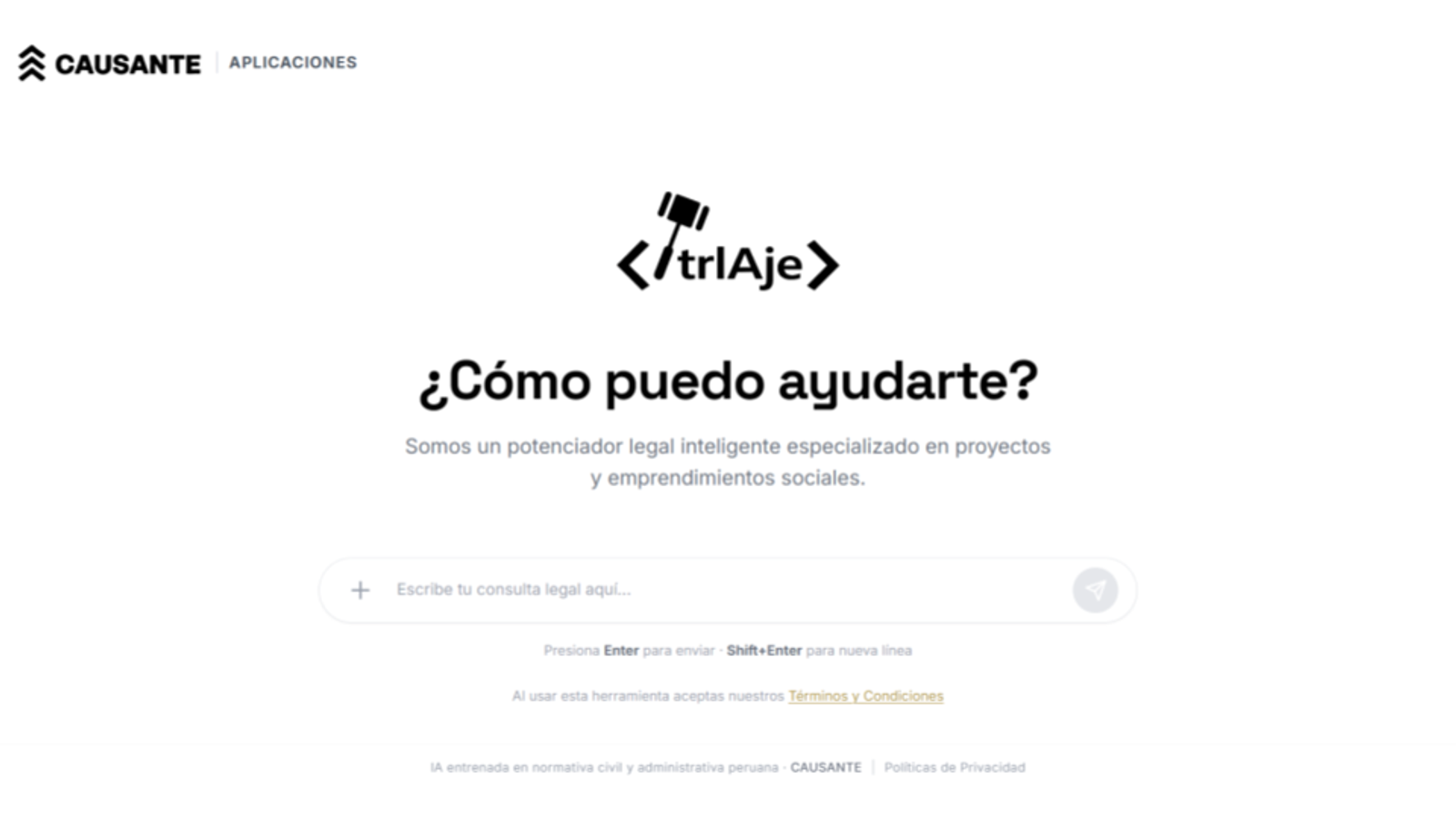
In 2025, a regulation publicly known as the "anti-NGO law" was approved in Peru, which reinforces control over NGOs and media with international financing. In practice, this regulation has been perceived as a mechanism to restrict and silence civic organizations dedicated to demanding accountability, in a context where non-compliance can lead to fines of approximately 600,000 dollars, with a real capacity to put the continuity of many organizations at risk. Faced with this, NGOs face a legal system that is complex, technical, and expensive to navigate, often without sufficient resources to quickly access specialized advice.
We created trIAje as a legal orientation tool to help civic organizations understand this regulatory environment and better prepare to act. The tool answers doubts, explains processes step-by-step, and offers examples that help clarify legal language that is difficult to understand. In addition, it was deployed on MapleAI, an end-to-end encrypted server, to protect the data and information entered by user organizations. trIAje does not replace lawyers, but it allows organizations to arrive better informed, with more clarity about their situation, and with better questions to take advantage of legal advice that is usually expensive.
We developed a legal orientation tool to help civic organizations better understand a complex regulatory environment, with a safe, accessible, and useful experience for making better decisions.
The tool has been adopted by the Andean civic ecosystem, a network of 31 civic organizations in more than 10 regions of Peru. It has helped these organizations advance in formalization processes, build initiatives that comply with legal requirements, and reduce comprehension barriers in the face of complex regulation, thus contributing to the strengthening of the Andean civic space.