
Ballot Simulator
From a complex election and an unprecedented ballot to a massive-use civic practice tool with a presence on everyday platforms.
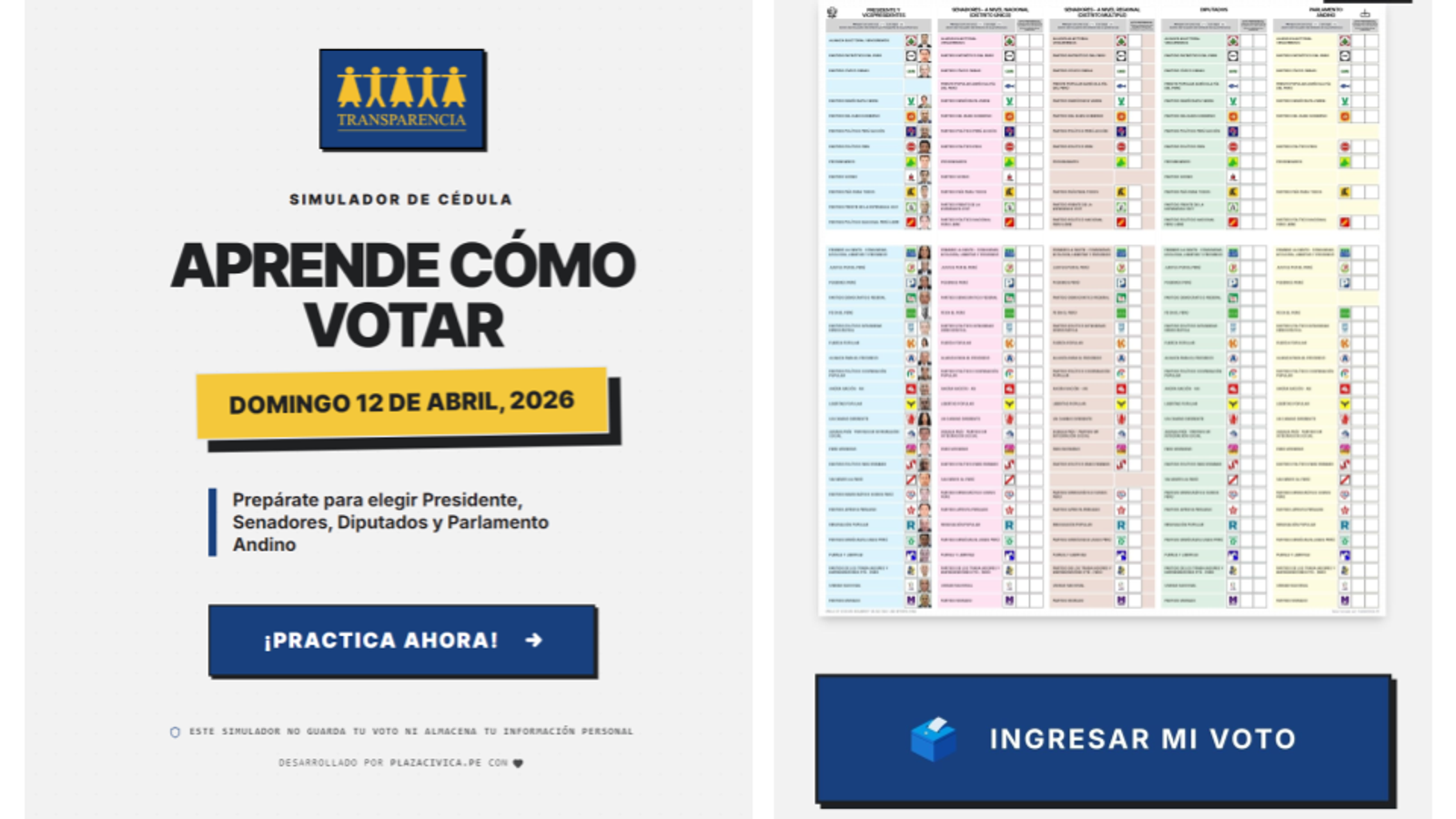
The 2026 general elections in Peru presented exceptional complexity: in a single 42 x 21 cm electoral ballot (almost A3 size), the citizenry had to vote for president and vice presidents, national senators, regional senators, deputies, and the Andean Parliament. Added to this was a key fact: more than 2.5 million new voters had never been in front of an electoral ballot, much less one of that magnitude. In that context, the risk of confusion, involuntary errors, and anxiety in the act of voting was especially high.
We designed and implemented a web-based simulator that faithfully replicated the official ballot. Citizens could select candidates exactly as they would on election day, receive immediate feedback on whether their vote would be valid or invalid, and repeat the process as many times as needed.
The simulator reproduced the experience of interacting with the real ballot, helping users better understand its structure, practice the voting process, and reduce comprehension barriers at a key moment for democracy. The solution went one step further by being integrated, through a partnership with Yape, into a platform that is part of the daily lives of millions of Peruvians.
We designed and implemented a digital tool so that the citizenry could practice voting in a simple, understandable, and close way, and we articulated alliances to take it to platforms of daily use.
The tool recorded more than 3 million interactions and was used by over 500,000 unique users during the three weeks leading up to the elections. In addition, more than 400,000 people completed the vote simulation, representing a conversion rate of nearly 90% of unique users.
Its integration into Yape, the most widely used digital wallet in Peru, together with collaboration with Asociación Civil Transparencia and ONPE on voter education, dissemination through social media and political WhatsApp groups, and amplification by opinion leaders and influencers, helped turn votabien.pe into a high-reach civic tool that was shared organically ahead of the elections.